Understanding the pollution crisis is the first step. Solving it is the next. Every cleanup teaches a lesson — and every lesson inspires the next cleanup.
Every fact below is a wake-up call. Every cleanup is a response.
of plastic enter aquatic ecosystems every year
That's a garbage truck's worth of plastic dumped into our oceans, rivers, and lakes every single minute.
Source: UN Environment Programme, 2024
of marine life affected by plastic pollution
From microscopic plankton to the largest whales, plastic now touches every level of the ocean food chain.
Source: Ocean Conservancy
of sea turtles worldwide have ingested plastic
Plastic bags drifting in the water look like jellyfish — a sea turtle's favorite meal.
Source: Center for Biological Diversity
cigarette butts littered annually
Cigarette filters are made of cellulose acetate — a plastic that breaks into thousands of microplastics. They're the #1 most-littered item on Earth, accounting for 30–40% of all coastal cleanup debris.
Source: World Health Organization
of US rivers and a third of US lakes are too polluted to use
Pollution doesn't stay in the ocean. Our local rivers and lakes are in crisis too — too polluted for swimming, fishing, or drinking.
Source: US Environmental Protection Agency
microplastic particles eaten by a single blue whale per day
During feeding season, the largest animal on Earth filters between 230 kg and 4 metric tons of plastic from the ocean.
Source: Ocean Conservancy
whales, dolphins, and porpoises killed yearly by ghost fishing gear
Lost or abandoned fishing nets — "ghost gear" — make up about 20% of all marine plastic and continue trapping wildlife for years after they're discarded.
Source: Fauna & Flora International
Most ocean plastic starts hundreds of miles inland — in our parks, our streets, our backyards. Cleanup begins everywhere.
Beaches & Oceans
The visible front lines.
Single-use plastics, food wrappers, fishing gear, and microplastics wash up daily. But what we see on the shoreline is less than 5% of the plastic actually in the ocean — most of it has sunk to the seafloor or broken into microplastics.
Rivers & Lakes
The hidden highways.
Just 1,000 rivers carry 80% of the plastic that ends up in the ocean. Inland lakes act as accumulation hotspots — once plastic enters still water, it doesn't leave. Local rivers and lakes are where most ocean pollution starts its journey.
Parks & Public Spaces
Where the next generation plays.
Food wrappers, bottles, vape cartridges, and disposable cups collect where families gather. Park litter is small in volume but high in impact — kids see it, animals eat it, and rainwater carries it straight to the storm drain.
Storm Drains & Streets
The pipeline you don't see.
Every storm drain in a coastal community connects directly to the ocean — usually with no filter in between. A cigarette butt flicked in a parking lot in Tennessee can reach the Gulf of Mexico in days.
These aren't abstract problems. They're happening right now, to creatures we love and ecosystems we depend on.
Animals Are Starving with Full Stomachs
Sea turtles fill up on plastic bags they mistake for jellyfish. Seabirds feed bottle caps to their chicks. The animals look fine on the outside — they're starving on the inside, with no room for real food.
Microplastics Are in Our Food
60% of fish studied worldwide contain microplastics. Once plastic breaks down small enough, it enters the food chain — from plankton to fish to humans. Microplastics have been detected in human blood, lungs, and even placentas.
Coral Reefs Are Suffocating
Plastic debris blocks sunlight, smothers coral, and spreads disease. Reefs already weakened by warming oceans now face the added threat of being literally choked by trash. Lose the reefs, and we lose 25% of all marine life.
"Dead Zones" Are Growing
Fertilizer runoff and pollution create areas where oxygen levels drop too low for life. The Gulf of Mexico dead zone — fed by runoff from 31 states — is sometimes larger than New Jersey.
Drinking Water Is Contaminated
Microplastics have been found in 83% of tap water samples globally and in bottled water around the world. The plastic we throw away today is in the water we drink tomorrow.
Not all environmental action is equal. Here's what science shows actually works — and what we're doing about it.
Plastic Bag Bans Cut Beach Litter by 25–47%
Research from the Ocean Conservancy across hundreds of cleanup sites shows that targeted bans on single-use plastics produce measurable, immediate drops in beach litter. Policy works.
Community Cleanups Remove Millions of Pounds Yearly
A single coordinated cleanup network removed over 5 million pounds of trash with 220,000 volunteers in one year alone. Multiply that by every community on Earth, and you have a movement.
Source Reduction Beats Cleanup Every Time
Refillable bottles, reusable bags, package-free shopping, and refusing single-use plastic at the source eliminates the problem before it begins. The plastic that's never produced is the plastic that never pollutes.
Education Under Age 10 Creates Lifelong Stewards
Studies show environmental values formed in early childhood persist into adulthood. Kids who grow up cleaning beaches and learning ecosystems become the adults who protect them — and bring their parents along the way.
Blockchain Verification Builds Trust at Scale
Until now, no one could prove a cleanup actually happened. With B3TR Beach, every event is tracked on the VeChain blockchain — transparent, tamper-proof, and rewarded with B3TR tokens. We turn good actions into permanent record.
B3TR Defenders come in all shapes and sizes. These two are ready to help you become one.
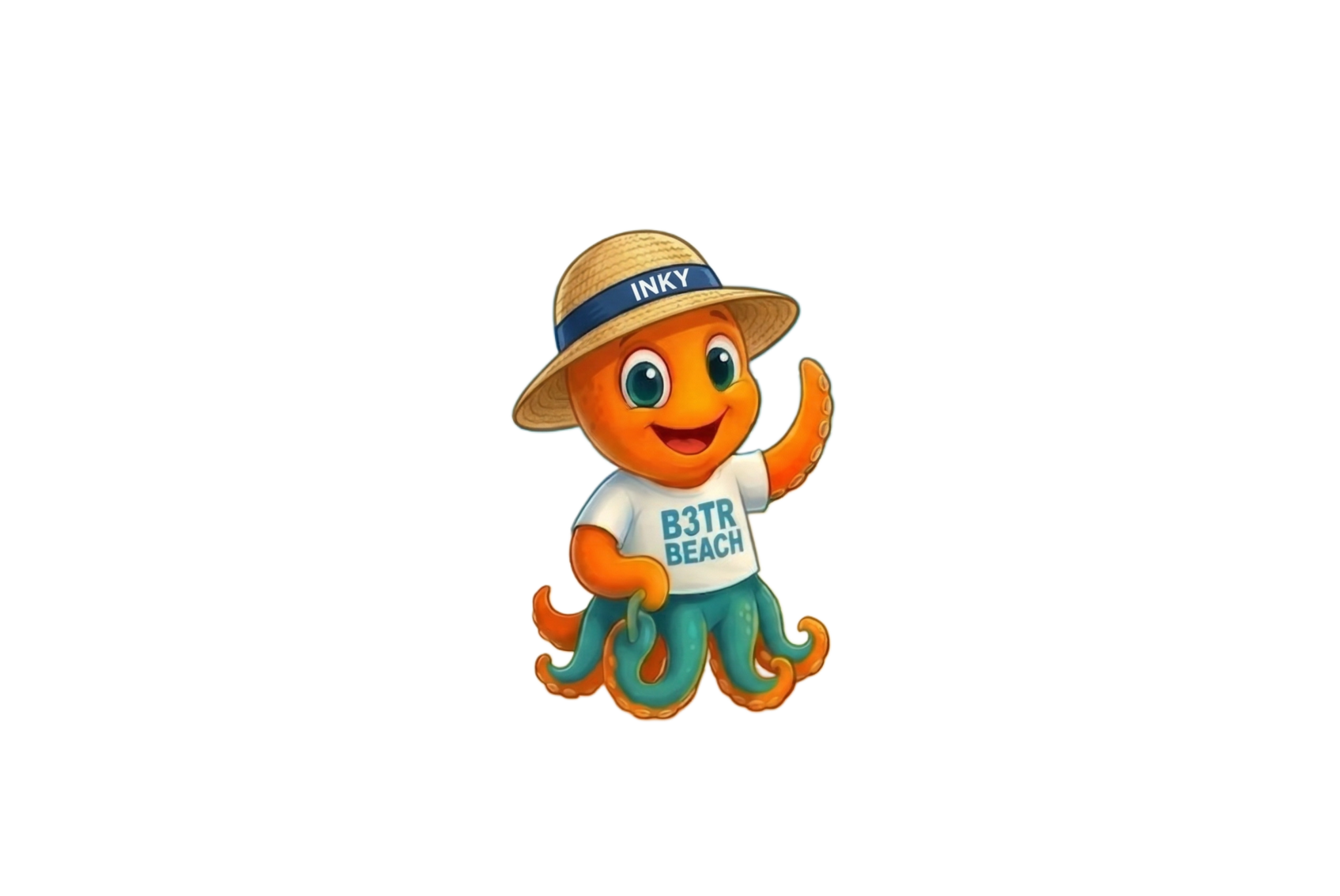
Inky the Octopus 🐙
Ocean Advocate
“Hi! I’m Inky! I live in the ocean and I see what plastic does every day. I want to help kids like you understand why our seas matter — and how YOU can save them. With eight arms, I can clean up a LOT of trash. With your help, we can clean up even more!”
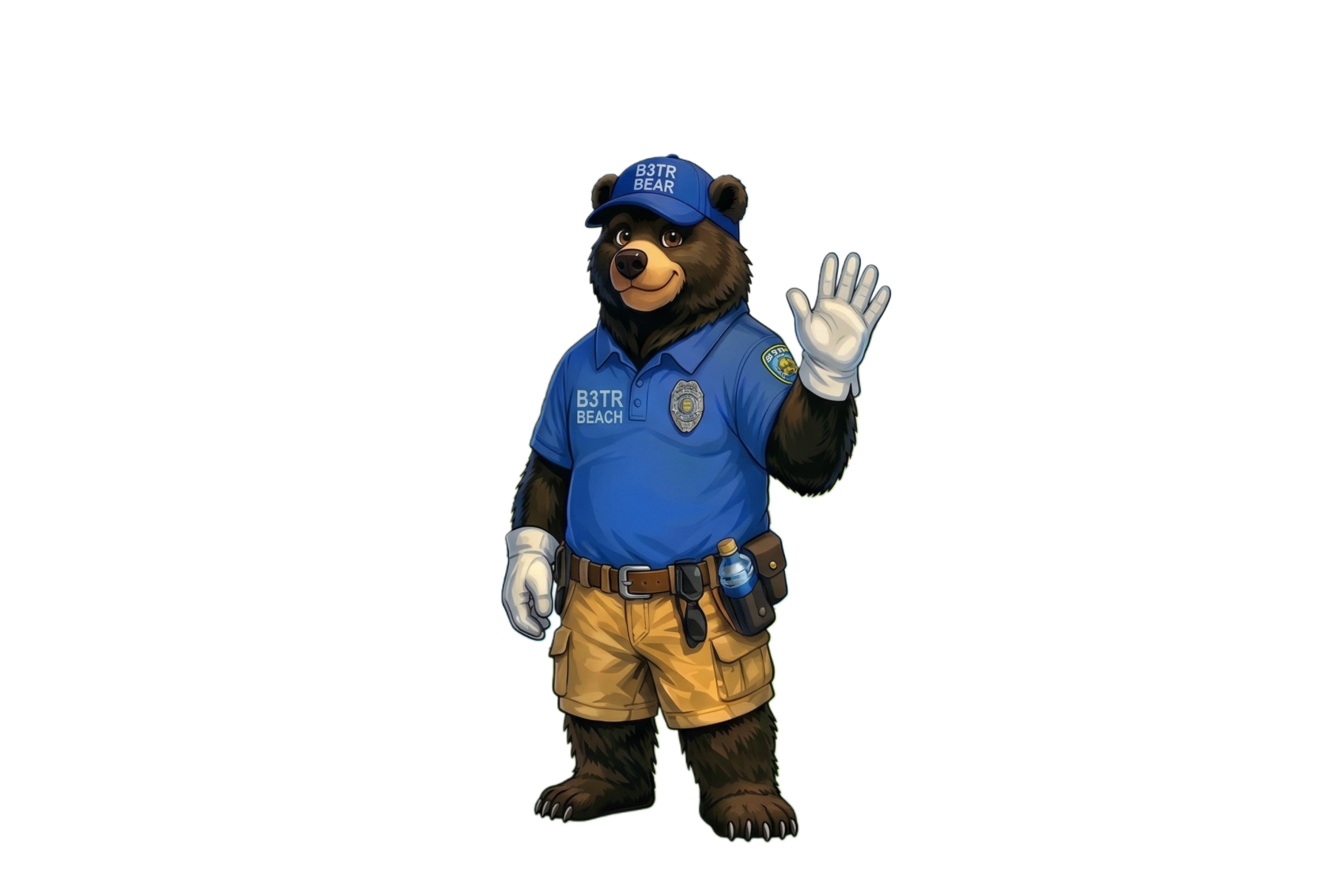
B3TR Bear 🐻
Land & River Expert
“Hey there! I’m B3TR Bear (yes, that’s pronounced ‘better bear’). I take care of rivers, parks, and forests. Did you know? Most of the trash that ends up in the ocean starts on land — and that means YOU can stop it before it ever reaches the sea! Let’s protect our planet together!”
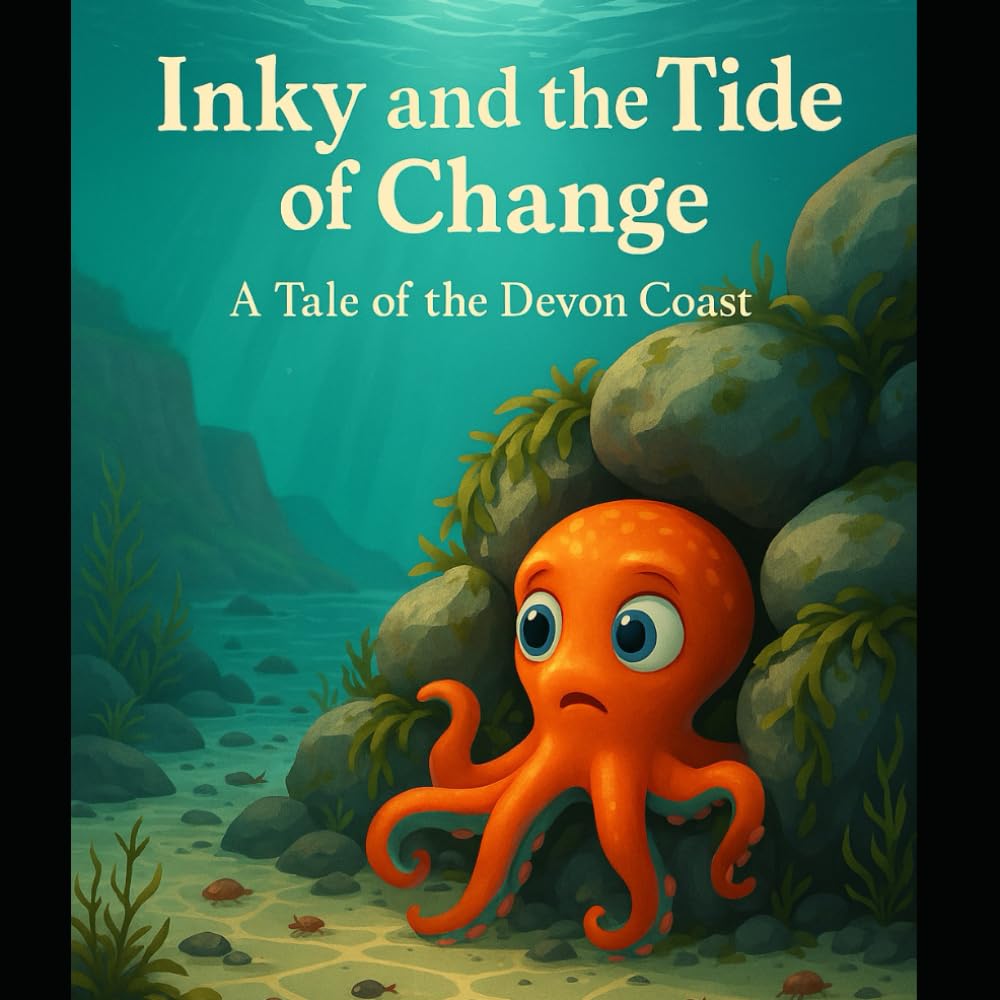
Inky’s Children’s Book
Read the official Inky the Octopus children’s book — a fun, beautifully illustrated story that teaches kids about ocean conservation through Inky’s adventures.
Get the Book on Amazon →How Kids Can Help — The B3TR Defender Checklist
- ✓Carry a reusable water bottle
- ✓Pick up litter when you see it (with a grown-up's help)
- ✓Never flick a cigarette butt, gum, or wrapper on the ground
- ✓Learn what goes in recycling vs. trash
- ✓Tell a parent or teacher when you see pollution
- ✓Bring a friend to your next cleanup
- ✓Talk about what you learned — knowledge spreads!
Take the B3TR Pledge
“I pledge to be a B3TR Defender of my community.
I will pick up litter when I see it.
I will protect animals by keeping their homes clean.
I will teach others what I’ve learned.
And I will never give up — because the planet is worth fighting for.”
Teachers shape the next generation. We’re here to help.
B3TR Beach partners with schools, after-school programs, and youth organizations to bring environmental cleanup education directly to classrooms. Our materials are designed to make pollution science accessible, action-oriented, and genuinely fun — the kind of lesson kids talk about at the dinner table.
Free Lesson Plans (PDF)
Age-appropriate worksheets and lesson plans covering ocean pollution, recycling fundamentals, and ecosystem science. Aligned with K–8 curriculum standards. Download free, use forever.
Download Lesson Plans (Coming Soon)Classroom Visits & Workshops
Available in our home regions of Devon, UK and Chattanooga, Tennessee. Our team can visit your school for cleanup demonstrations, Q&A sessions, and interactive activities.
School Cleanup Sponsorships
We help schools host their own community cleanup events — providing supplies, B3TR Beach branded gear, and the dApp framework to track impact. Your students do the work; we make sure it counts.
📩 Interested in partnering with us? Reach out to education@b3trbeach.org — we read every email and respond within 48 hours.
B3TR Beach is more than a website — it’s a working ecosystem turning education into measurable cleanup impact.
The Impact Fund Model
We fund cleanup events directly. Local organizations apply, we provide supplies, swag, and support — and the entire community wins.
Apply for a Grant →Clean-to-Earn Rewards
Every verified cleanup earns B3TR tokens via VeChain blockchain. Volunteers get rewarded for their time. Communities get cleaner. The blockchain provides an unfalsifiable record of every action.
Open the dApp →Powered by VeBetterDAO
We're part of a global ecosystem of dApps incentivizing real-world good. Sustainable hydration, tree planting, recycling, healthy sleep — and beach cleanups. Every action counts.
Meet Our Partners →Ready to Make a Difference?
The crisis is real. The solution is in our hands. Find a cleanup near you, support our mission, or open the dApp and start earning rewards for action.